Your browser is not supported.
For the best experience, please access this site using the latest version of the following browsers:



By closing this window you acknowledge that your experience on this website may be degraded.
Honeywell Aerospace investments strengthen F-35 fleet readiness and aircraft availability
Company-funded sustainment, reliability and production-capacity initiatives support mission-capable aircraft today while preparing the fleet for future demands
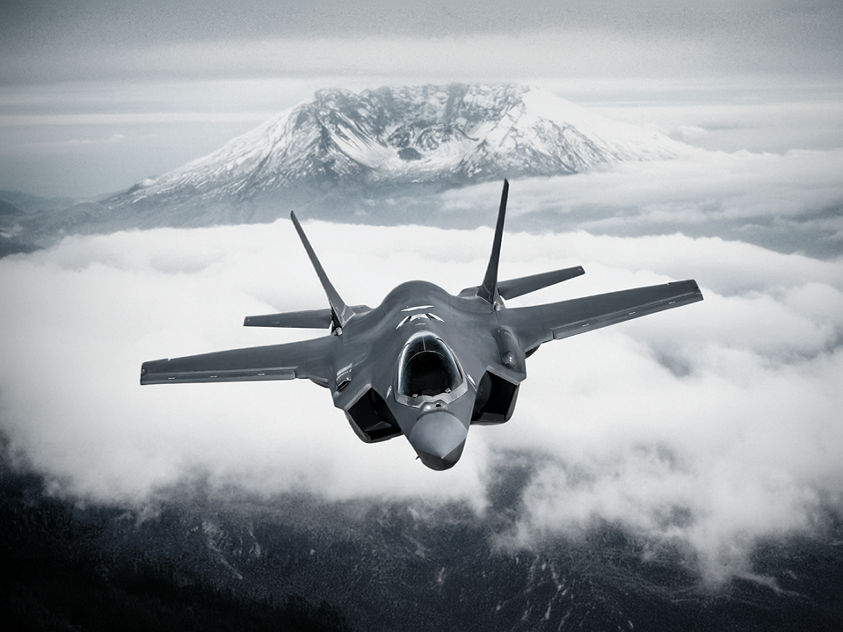
PHOENIX, Sep 14, 2026 — Honeywell Aerospace (NASDAQ: HONA) has launched a series of sustainment, reliability and production-capacity initiatives designed to strengthen F-35 fleet readiness, increase aircraft availability and support long-term mission effectiveness.
Through continued investments in manufacturing capacity, supply-chain resilience, reliability improvements and thermal-management technologies, Honeywell Aerospace is helping operators keep aircraft mission capable while positioning the fleet to meet evolving operational requirements.
For generations, Honeywell Aerospace has supported military operators with technologies that improve aircraft performance, reliability and readiness. These latest investments are focused on a simple outcome: helping F-35 operators maximize fleet availability and ensure aircraft are ready when called upon.
"With the global F-35 fleet continuing to grow, sustaining readiness requires ongoing investment in both technology and support capacity," said Rich DeGraff, president and CEO of Control Systems at Honeywell Aerospace. "Everything we are investing in, from reliability improvements and production capacity to next-generation thermal-management technologies, is aimed at helping operators maximize fleet performance today while preparing for future mission demands."
To support those objectives, Honeywell Aerospace continues to invest in technologies, capabilities and operational improvements that enhance readiness, reliability and long-term sustainment performance across the F-35 enterprise. These efforts help reduce risk, improve supportability and ensure the platform can continue evolving to meet future mission requirements.
These investments are already producing measurable results. The improvements help strengthen spare availability, support sustainment operations and contribute to greater aircraft readiness across the F-35 enterprise.
A key enabler of these readiness improvements is Honeywell Aerospace's integrated Power and Thermal Management System (PTMS), which supports critical aircraft functions and mission systems throughout the global F-35 fleet. Developed in partnership with Lockheed Martin and the Joint Program Office from the inception of the Joint Strike Fighter program, the PTMS has accumulated more than one million flight hours across 1,325 delivered units supporting aircraft operating around the world. The system continues to provide dependable power and thermal management for critical aircraft functions and mission systems across the F-35 enterprise.
As the global F-35 fleet continues to expand, operators are working to scale sustainment capacity and support infrastructure to meet growing operational demands. Honeywell Aerospace remains confident in the proven reliability of its PTMS and continues to invest in manufacturing capacity, sustainment support and technology enhancements that help maximize aircraft availability and mission readiness across the fleet.
Building on that proven foundation, Honeywell Aerospace continues to invest in technologies that improve performance, reliability and future growth capacity while minimizing disruption to the existing fleet. The company's PTMS Derivative Architecture leverages a high degree of commonality with the current fielded system, allowing future capability enhancements to be introduced through lower-risk, more affordable increments that keep pace with mission system upgrades on the aircraft.
Honeywell Aerospace's internally funded development activities include a Heat Exchanger Upgrade, Liquid Cooling Upgrade, Performance Software Upgrade and turbomachine durability improvements. Together, these initiatives are designed to increase cooling capacity, improve operational margins, enhance maintainability, reduce lifecycle costs and support future mission-system growth requirements.
The derivative-architecture approach also helps minimize integration complexity, reduce operational disruption and preserve existing sustainment infrastructure. By leveraging established production capabilities, qualified suppliers, existing logistics networks and proven operational experience, Honeywell Aerospace can accelerate capability fielding while reducing schedule, technical and transition risk.
About Honeywell Aerospace
Honeywell Aerospace (Nasdaq: HONA) is an independent global aerospace and defense company whose critical technologies are broadly deployed on the world's leading commercial air transport, business aviation, defense and space platforms. These integrated solutions enable safer, more efficient, and more reliable missions. Headquartered in Phoenix, Arizona, the company employs more than 36,000 people globally and supports more than 10,000 customers. With a broad portfolio spanning avionics and navigation systems, engines and power systems, and control systems for aircraft, Honeywell Aerospace combines deep engineering expertise and an unrelenting commitment to quality to drive innovation and long-term value for the aerospace industry. For more information, visit honeywellaerospace.com or follow Honeywell Aerospace Technologies on LinkedIn.