


Commercial
Advanced avionics, connectivity and mission-critical solutions for commercial airlines, business jets, cargo operators, helicopters and more.

Your browser is not supported.
For the best experience, please access this site using the latest version of the following browsers:
By closing this window you acknowledge that your experience on this website may be degraded.
The aircraft you already fly can be safer, more capable and more connected long before a replacement arrives. That's what continuous modernization makes possible.

Airlines and regional carriers work under a familiar set of pressures: fly more safely, cut fuel burn and emissions, give pilots and passengers a better experience, and protect margins in a cost sensitive business.
As commercial aviation evolves, airline modernization has become one of the most effective ways to improve aviation safety, operational efficiency, fleet reliability and passenger satisfaction.
No single aircraft addresses all of that on its own. That's why modernization across the industry has shifted from a one-time event toward a continuous process.
"Our airline and regional carrier customers are not modernizing for modernization's sake. They are looking for solutions that help them become safer, more resilient, more efficient and more profitable.
The priorities differ from airline to airline."
Brandie Maxwell
Vice President, Americas Air Transport & Regional, Honeywell Aerospace
The pressures faced by airlines and regional carriers show up on two fronts:
As air traffic grows, airport surfaces get busier. Runway incursions and wrong-surface operations are still persistent risks. Weather and terrain add their own variables.
Modern safety upgrades help by turning more of that information into clear, timely alerts on the flight deck. Crews spend less time interpreting what's around them and more time deciding what to do. On the runway, a few extra seconds of warning can make all the difference.
As aircraft become more connected, the benefits reach well beyond the flight deck.
Digital datalink messages can ease congestion on voice radio channels and cut down on misheard instructions. Data shared after each flight can help maintenance teams spot issues early. They can move from fixing problems to anticipating them.
Connectivity also supports resilience. When weather, equipment issues or other disruptions hit, better information in near real-time helps crews and operations teams adapt.
None of this happens in a single upgrade cycle. It's a series of steps, each one building on the last.
For example, you can start by adding capability that improves safety. Then extend into connectivity and data as new technology becomes available.
Every airline's path looks different. A good place to start is a clear view of where your capability is thinnest today, whether in aircraft connectivity or other critical areas and where one upgrade can make a real difference.
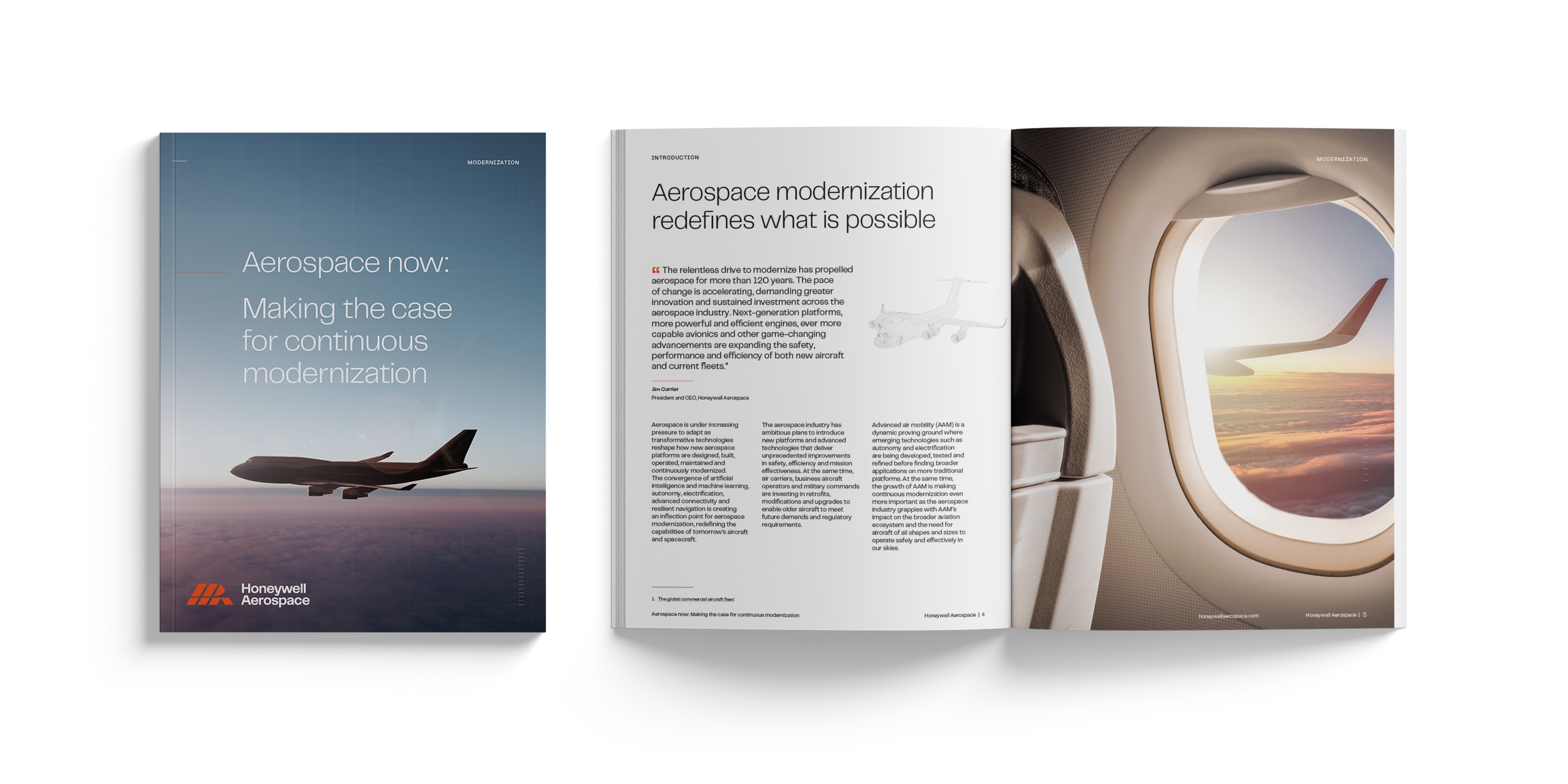
See how airlines are extending aircraft life and capability without waiting for an entirely new platform.