Your browser is not supported.
For the best experience, please access this site using the latest version of the following browsers:



By closing this window you acknowledge that your experience on this website may be degraded.
Modernizing U.S. aviation without compromising safety
At the second annual American Aviation Leadership Summit, a nationwide ground stop framed a broader debate over how to upgrade the system and safely make room for new aircraft.
Key takeaways
- Why upgrading air traffic equipment isn’t enough without backups that can withstand the same disruption.
- How early testing and rules designed for drones can help bring new aircraft into service without lowering safety standards.
- Why training controllers and technicians, strengthening supply chains and acting on safety recommendations matter for U.S. aviation leadership.
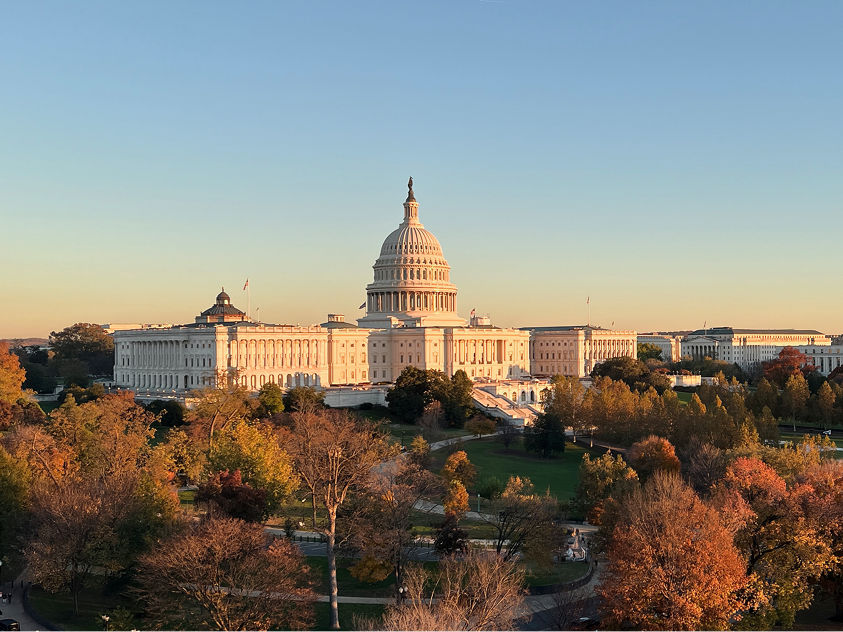
The recent nationwide ground stop, which paused departures and disrupted air travel across the U.S., created an unexpected backdrop for the second annual American Aviation Leadership Summit in Washington, D.C.
As Jim Currier, president and CEO of Honeywell Aerospace, stated plainly in his opening remarks: “The technologies change, but to be clear, the responsibility does not. Safety always comes first, and innovation must solve real problems for the people who fly, operate and depend on these systems every day.”
Those remarks framed an industry-wide question: How can the United States make its aviation system more resilient for today while making room for the aircraft and operations of tomorrow?
Design for safety before the first flight
For the aviation industry, designing for safety starts well before a new aircraft leaves the ground. Flight simulation and early testing can reveal how pilots interact with aircraft systems and identify what needs to change before flight or wider deployment. The lesson extends beyond validating an individual design: safety must remain central as new operations expand. Once aircraft are in service, acting on findings from accident investigations is equally important. The discussion of the Reagan National collision underscored the stakes of turning those lessons into action.
Build a system that can withstand disruption
The ground stop put aging communications and surveillance equipment at the center of the airspace discussion, underscoring why U.S. airspace modernization is critical to building a safer, more resilient aviation system. But replacing equipment is only part of the job. A new fiber line routed along the same path as the old one may still be vulnerable to the same disruption. As the U.S. Department of Transportation’s Undersecretary for Policy Ryan McCormack explained, “We need to look beyond that to have even more redundancy and resiliency … you'll have a situation like we've had at Newark or like we've had at Dallas where someone digs where they're not supposed to and they sever that line leading to a ground stop at that particular airport. We want to solve for challenges like that.”
Resilience also depends on infrastructure on the ground. Airport capacity must keep pace with air traffic upgrades, with smaller and regional airports included in investment decisions. Across the industry, coordinated support for modernization needs to be matched by sustained funding and congressional oversight.
Update the rules without lowering the bar
Modernizing certification means updating the process without lowering safety standards. The summit discussions pointed to the value of real-world test data, standards focused on what an aircraft can safely do rather than prescribing exactly how it must be designed, and early engagement between manufacturers and regulators. Across the industry, a practical challenge remains: How can reviews keep pace when software changes faster than aircraft hardware?
Drone delivery illustrates the broader need for rules tailored to new types of operations without weakening safety requirements. As advanced air mobility expands to include air taxis, electric vertical takeoff and landing (eVTOL) aircraft and uncrewed cargo operations, regulators and the industry at large will need to address how these aircraft can safely integrate into existing airspace
At the summit, the proposed Part 108 framework offered a potential path beyond case-by-case waivers, though operators and regulators would still need shared technical standards. The industry’s experience under Part 135, the air carrier rules, also offers lessons about reliability and redundancy. Chief Government and Aviation Officer of Wing Margaret Nagle emphasized the importance of preserving that safety intent: “We’re flying every day over communities at a significant rate. And so the intent of that regulation is the right one. The things that we learned from going through that process are critically important. How do we make sure we have a system that is safe, reliable, has redundancy in it?”
Invest in the people and suppliers who make growth possible
Neither new standards nor better equipment can make up for a shortage of people to put them to work. Air traffic modernization depends on controller staffing and training, while broader industry growth requires apprenticeships and technical education. Dependable domestic sources for parts and materials are another essential foundation. The ability to build, certify and operate new aircraft at scale will help determine whether the United States turns its aviation innovations into a lasting competitive advantage.
What happens after the summit
Not all of that work happens in Washington. Community engagement is another industry-wide lesson: before introducing a new service, operators can explain how it works and listen to residents’ concerns about noise and privacy. Just as early engagement with regulators can inform aircraft development, early conversations with local officials and residents can inform how new operations are introduced.
The ground stop showed how much aviation resilience depends on the system working as a whole. The test after the summit is whether funding turns into upgrades that help the network withstand disruption, whether new aircraft gain a clearer path to routine operations, and whether agencies and industry follow through on safety recommendations. In her keynote, Jennifer Homendy, chairwoman of the National Transportation Safety Board (NTSB), recalled how investigators called for collision-avoidance technology after a 1969 midair collision. Her point applies just as sharply today:
"The recommendation was clear, but recommendations alone don’t make aviation safer. Action does.”
Jennifer Homendy
Chairwoman
National Transportation and Safety Board (NTSB)