Your browser is not supported.
For the best experience, please access this site using the latest version of the following browsers:



By closing this window you acknowledge that your experience on this website may be degraded.
Why resilient supply chains matter in the modern spacecraft
As the satellite industry grows, Honeywell Aerospace can help companies and governments navigate the complicated logistics of an ever-changing supply chain.
Key Takeaways
- Why growing spacecraft volumes are making supply chain resilience increasingly important
- How strategic sourcing, manufacturing flexibility and supplier partnerships can help mitigate disruptions
- Why designing for the actual mission (and not overengineering) can help balance reliability, cost and speed to market
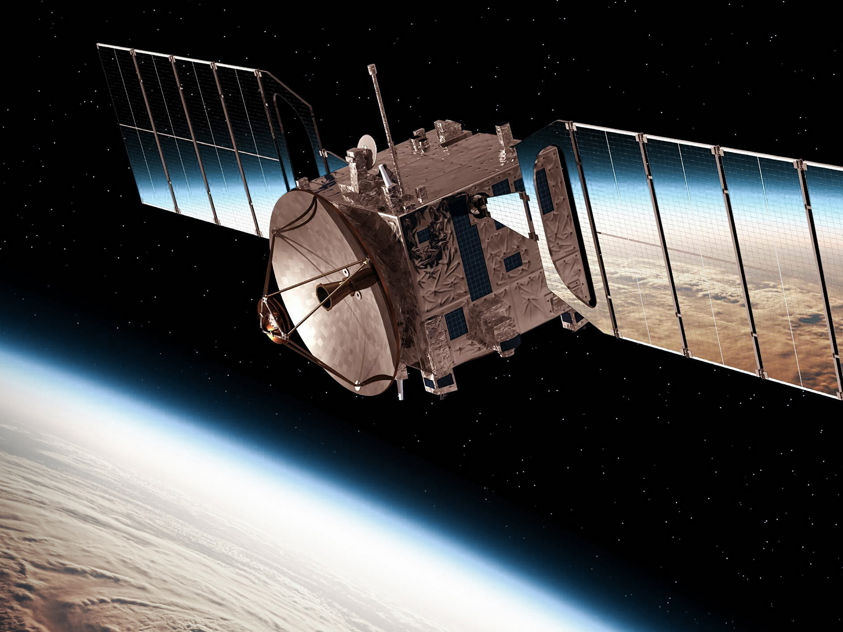
The spacecraft industry is in a period of significant change. Satellite volumes are increasing, with more companies and governments than ever before launching satellites. This puts an even greater emphasis on the need for resilient, flexible supply chains.
How the space supply chain is changing
Satellite launches are growing exponentially, with annual numbers in the thousands as opposed to the dozens of just two decades ago. This unprecedented launch activity requires greater flexibility across the space supply chain.
But scale alone doesn’t create resilience. Suppliers need to be equipped to support the unique production requirements of space, where even huge increases in orders still amount to a low volume when compared with other industries such as automotive. Standardization is slowly becoming possible, but customization is still the rule.
"Scale alone doesn’t create resilience. Suppliers need to be equipped to support the unique production requirements of space.”
Spacecraft supply chain resilience starts with the right supplier relationships
A supplier cannot be just a transactional vendor. Instead, it must be a partner with an interest in the space industry and the capabilities to adapt as requirements change.
Honeywell Aerospace has a long history in both aviation and space exploration. With multiple manufacturing sites in the US and internationally, plus a network of suppliers with strong working relationships, Honeywell Aerospace can adapt to any volume and any demand.
Design for mission requirements, not beyond them
Spacecraft components must last the full mission because, unlike aircraft, there are no landings where repairs can be made. But overdesigning those components can lead to higher costs and slower response times.
Honeywell Aerospace’s historical knowledge in the industry means not starting at zero with every new request. Instead, it’s possible to adapt existing components, combining speed and flexibility with a degree of standardization. Honeywell Aerospace understands this delicate balance and can work with a government’s extensive regulations just as easily as it can handle a newer company’s lack of experience.
Expertise for the next generation of spacecraft manufacturing
Building for the future is about more than just producing faster. It also requires suppliers and manufacturers to rethink how they design products, plan production, manage risk and collaborate across the supply chain.
For Honeywell Aerospace, that means combining 60 years of deep space expertise with flexible manufacturing, strategic sourcing, supplier partnerships and technologies that can be adapted across applications.
By designing to the mission, strengthening the supply base and creating more efficient paths from development to production, organizations can build a resilient spacecraft supply chain capable of supporting the next generation of missions