


F124 Turbofan Engine
Overview
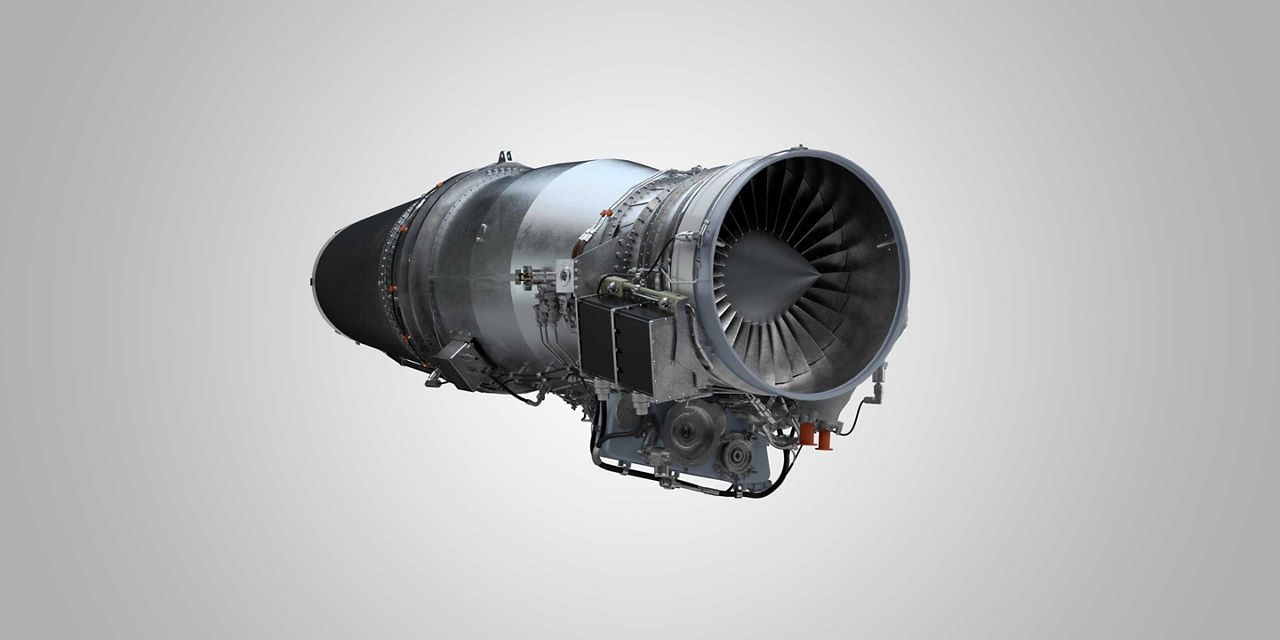
The F124 turbofan engine has what it takes to power today’s most advanced military jet trainers and light combat fighters. With the highest thrust-to-weight ratio in its class, its unique single-stage design maximizes engine performance. The F124 delivers the power required for demanding missions without a costly and complex afterburning system, helping reduce fuel consumption and wear on vital engine components while supporting high levels of reliability and availability.
The F124 features advanced Full Authority Digital Electronic Control (FADEC) and an integrated Engine Monitoring System (EMS) to monitor engine health and usage and streamline troubleshooting. Its modular design helps simplify maintenance and repair, supporting aircraft availability and getting training instructors and student pilots back in the air quickly and efficiently.
For flight training applications, the F124 combines proven performance, maintainability and reliability in a compact propulsion solution designed for advanced military jet trainers and light combat aircraft.
Compatible Platform
Aero Vodochody L-159 ALCA
Beechcraft M-346N
Boeing X-45A
Leonardo DRS
Specifications
Weight
- 1180 lbs
Dimensions
- DIA 24 Inches X L 112 Inches
Takeoff Thrust
- 6300 lbs
Key Benefits
- Dual Channel FADEC
- Ease of maintenance
- High durability
- High platform availability
- High reliability
- Higher payload available to aircraft
- Highest thrust to weight ratio of its class
- Lower maintenance costs
- Modular engine design
- Non-afterburning design