

HTF7000 Turbofan Engine
The Honeywell HTF7000 family of engines has set a new standard for business jet propulsion systems. Find out more!

Your browser is not supported.
For the best experience, please access this site using the latest version of the following browsers:
By closing this window you acknowledge that your experience on this website may be degraded.
From nose to tail: Business aviation takes flight with Honeywell Aerospace
From engines and avionics to connectivity and safety systems, explore how Honeywell Aerospace's integrated technologies are leading business aviation.
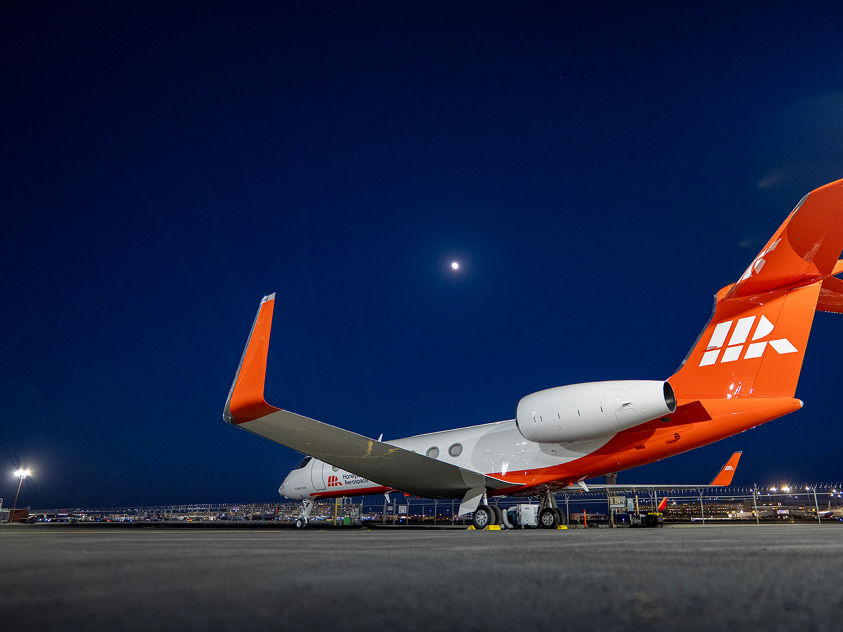
Powerful engines, intuitive flight decks, advanced safety and navigation systems, intelligent control technologies and high-speed connectivity are shaping business aviation. Together, these connected technologies are helping improve operational efficiency, safety and the passenger experience.
Leading business jet manufacturers rely on Honeywell Aerospace for innovations that simplify flying, enhance passenger comfort and improve safety.
“Business aviation original equipment manufacturers have always implemented new technologies to make the latest aircraft capable of flying farther, faster and more efficiently, and this new generation of aircraft is no different,” said Taylor Alberstadt, vice president of Americas aftermarket at Honeywell Aerospace.
“We deliver ‘nose-to-tail’ hardware, software and services for this market, with technologies across the entire aircraft, from engines and auxiliary power units to integrated flight decks and control systems to advanced navigation and seamless connectivity,” Alberstadt added.
Global demand for business aircraft remains robust, according to the 2026 Honeywell Global Business Aviation Outlook, which revealed a strong appetite for new and refreshed aircraft models and innovative technologies that raise the bar on flight safety, efficiency and passenger experience. Aircraft owners and operators explained that performance is a key consideration in new-aircraft purchases, with extended range, field performance and speed among their top priorities.
Major aircraft manufacturers Gulfstream, Bombardier and Dassault are rolling out flagship models, including the Gulfstream G700 and G800, the Bombardier Global 8000 and the Dassault Falcon 10X. Textron, Pilatus and Embraer also plan upgrades to established models.
Technology is also a key consideration as manufacturers introduce new and refreshed aircraft with spacious cabins, impressive ranges, advanced cockpits and upgraded communications and safety systems.
"Our turbofan engines, including the latest HTF7250G variant, continue to set new standards for performance, mission readiness and maintainability.”
Dave Marinick
President & CEO of Engines & Power Systems
Honeywell Aerospace
New aircraft models emphasize extended ranges, faster cruise speeds, larger payloads and greater fuel efficiency, with power provided by state-of-the-art propulsion systems such as the Honeywell Aerospace HTF7000 turbofan engine family.
“HTF7000-series engines’ exceptional performance has been proven time and again over millions of flight hours,” said Dave Marinick, president and CEO of Engines & Power Systems at Honeywell Aerospace. “Our turbofan engines, including the latest HTF7250G variant, continue to set new standards for performance, mission readiness and maintainability.”
Building on the success of engines like the HTF7000, Honeywell Aerospace engineers are now developing a new family of gas turbine engines that will be even lighter, quieter, more efficient and more powerful.
Auxiliary power units (APUs) are a critical enabler of modern business aviation, providing reliable onboard power to start engines, keep cabins comfortable and power cockpit systems on the ground and, when necessary, in flight.

“Advanced APUs like the GTCP36-150 continue our long legacy of delivering dependable, high-performance solutions business jet operators can count on,” Marinick said. “Our 36-Series APUs exhibit class-leading performance and reliability for the world’s leading business aircraft.”
We continue to advance APU technology to support the growing demands of more-electric aircraft, positioning these essential systems to play an expanded role as high-capacity onboard power sources for new and more-electric business jets.
“Our advanced control systems encompass the actuation, thermal management, environmental and lighting technologies that help modern business aircraft operate safely, efficiently and comfortably,” said Rich DeGraff, president & CEO of Control Systems at Honeywell Aerospace.
For example, pilots of today’s more-electric business aircraft increasingly rely on electromechanical actuation systems to move flight control surfaces, replacing traditional hydraulic systems with lighter, smarter and more efficient electrically powered controls.
Honeywell Aerospace’s Assure flight control actuation combines advanced sensors, digital controls and health monitoring to deliver precise, reliable actuation. It’s a system-level solution that can integrate actuators with flight control computers and power systems to create a cohesive, digitally controlled architecture.
Conventional environmental control system technology relies on engine bleed air to pressurize and air condition the cabin and cool aircraft electronics, which can affect engine performance. Honeywell Aerospace’s Attune cooling solution is an evolutionary next-generation vapor cycle system (VCS) that uses airflow to dissipate heat. Beyond cabin comfort, it circulates an advanced refrigerant around heat-generating components like avionics units, batteries, generators and electronics to absorb heat and transport it to a heat exchanger, where it’s released outside the aircraft.
Complementing Attune, our environmental control system (ECS) provides precise temperature, humidity and airflow management throughout the cabin and cockpit. Drawing on decades of expertise in thermal and air management, these systems help ensure passenger comfort and reliable operation in a wide range of conditions.
Advanced exterior lighting solutions, including aircraft landing and taxi lights, enhance safety and visibility. Our LED-based lighting systems provide improved efficiency, longer service life and reduced maintenance requirements.
"Anthem builds on Primus Epic’s legacy, introducing a new era of digital connectivity and intuitive flight-deck design.”
Bob Buddecke
President & CEO of Electronic Solutions
Honeywell Aerospace
We pioneered inertial navigation system (INS) technology and integrated INS with global navigation satellite system (GNSS) inputs to enhance safety, efficiency and navigation continuity for business aircraft pilots. Our attitude heading and reference systems (AHRS) provide business jets with precise attitude, heading and motion data that support flight displays, autopilot performance and enhanced situational awareness.
LASEREF VI is our most advanced inertial reference system for business jets. It delivers precise heading, attitude and position data with lower weight, power use, and maintenance requirements than earlier LASEREF generations. Designed as an upgrade path for aging systems, it offers improved reliability, lower maintenance needs, and easier integration across multiple platforms.
Our technology is advancing the use of fusing inertial, satellite and alternative navigation inputs to improve resilience when GNSS signals are jammed, spoofed or otherwise unavailable.
“What we’re finding is that there is no single ‘silver bullet,’” said Matt Picchetti, vice president and general manager for navigation and sensors at Honeywell Aerospace. “Resilient navigation systems are layered and multimodal, meaning they rely on complementary navigation sources working together rather than on any single technology acting alone.”
Our alternative navigation portfolio is built around an expanding software framework that intelligently integrates inputs from several non-GNSS sources like vision-aided navigation (VAN), magnetic anomaly-aided navigation (MagNav) and low Earth orbit (LEO) satellite navigation to deliver resilient, assured positioning when traditional GNSS signals are degraded or unavailable.
Advanced navigation and control systems provide the foundation of precise, reliable flight for modern business aircraft, helping pilots know exactly where they are, where they’re going and how to get there safely and efficiently.

At the center are advanced Flight Management Systems (FMSs) that integrate inertial navigation, satellite data and performance information to deliver accurate positioning, optimized routing and real-time guidance for every phase of flight.
By combining multiple navigation sources and intelligent flight planning, our FMS supports efficient operations while providing the resilience needed in today’s increasingly complex and connected airspace.
Our safety and surveillance systems help pilots operate with confidence in increasingly complex airspace and on the ground. These technologies can include terrain and obstacle awareness, runway awareness and landing protection, weather radar, traffic surveillance, synthetic vision and advanced cockpit alerts. These systems support pilots in challenging weather, busy airspace and unfamiliar airports while improving overall situational awareness throughout every phase of flight.
The IntuVue RDR7000 weather radar provides a clear, reliable view of weather up to 320 nautical miles ahead, enhancing safety and efficiency on every flight. Designed with advanced 3D volumetric scanning, it not only detects storms but also analyzes their intensity and structure, enabling crews to identify turbulence, hail and lightning threats with time to spare.
At the same time, Honeywell Aerospace systems such as the Traffic Collision Avoidance System (TCAS) help prevent midair collisions by tracking nearby aircraft and issuing timely advisories, while Enhanced Ground Proximity Warning Systems (EGPWS) technology provides alerts to help pilots avoid terrain and obstacles. Our latest MKV-A EGPWS provides earlier, more precise terrain and obstacle alerts, enhanced runway safety and greater resilience to GNSS interference.

Our runway safety technologies protect business aviation pilots during taxi, takeoff and landing by providing another layer of awareness when the risk of runway incursions and excursions is greatest. SmartRunway and SmartLanding provide aural and visual advisories. The latest addition, SURF-A, uses aircraft position and traffic data to detect developing runway conflicts and provide direct aural and visual warnings to pilots when a potential collision is within about 30 seconds.
We provide a broad portfolio of aviation communications technologies to help pilots and passengers stay connected from gate to gate worldwide. Our capabilities include advanced navigation and communication radios, VHF/UHF/L-band datalink systems, satellite communications terminals, cockpit voice and data connectivity, emergency locator systems and integrated avionics networking.
Our satellite communications systems keep aircraft connected far beyond the reach of ground networks. This includes the latest cockpit satcom solutions, such as Aspire 350 and Aspire 400, designed to provide dependable global voice and broadband data connectivity for cockpit communications, operational data transfer and passenger internet access.
Our new JetWave X cabin satcom system represents a major step forward in connectivity. As the first multi-network, multi-orbit solution, JetWave X seamlessly switches between different satellite constellations to provide consistent, high-performance coverage anywhere in the world.
This flexibility enables faster speeds, lower latency and greater reliability by dynamically selecting the optimal satellite link. It ensures uninterrupted connectivity for both pilots and passengers and positions business aviation for the next generation of always-on communications across global routes.
"Our advanced control systems encompass the actuation, thermal management, environmental and lighting technologies that help modern business aircraft operate safely, efficiently and comfortably.”
Rich DeGraff
President & CEO of Control Systems
Honeywell Aerospace
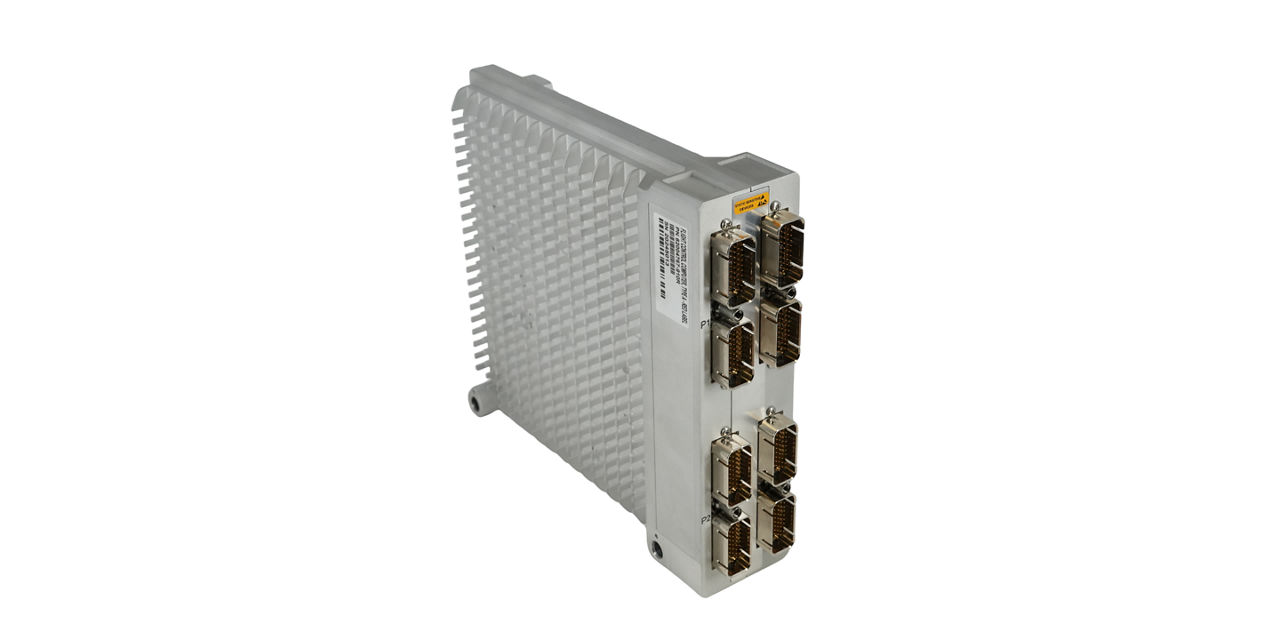
Honeywell Aerospace’s flight control computers are the digital ‘brain’ of modern fly-by-wire aircraft. These systems interpret pilot inputs, combine them with sensor data and command actuators that move elevators, ailerons, rudders, spoilers and other control surfaces with exceptional precision. The result is smoother handling, lower weight, improved efficiency and reduced pilot workload.
Our technology continuously processes data from air data sensors, inertial systems, navigation sources and aircraft systems, making thousands of calculations per second to optimize performance and safety. This enables advanced capabilities such as envelope protection, stability augmentation, trim optimization, gust suppression and automatic compensation for changing flight conditions. For pilots, this means more confidence and easier aircraft handling in all phases of flight.
Integrating flight control computers with avionics, sensors, actuation systems, and connectivity into a unified control architecture is a true advantage for business aviation owners and operators. Next-generation fly-by-wire systems like our innovative triplex Compact Fly-By-Wire Flight Control System (cFBW) can improve passenger comfort, simplify maintenance, support more-electric designs and create a pathway toward increasingly automated operations.
From advanced avionics and propulsion to power and control systems, Honeywell Aerospace provides a unique “nose‑to‑tail” approach to meeting the needs of business jet manufacturers, aircraft owners and operators. Beyond best-in-class product technology, Honeywell Aerospace solutions deliver tightly integrated, aircraft-level systems that enhance safety, efficiency, connectivity and cabin experience across the entire aircraft.
“Our breadth across avionics, propulsion, auxiliary power, control systems and other critical aircraft technologies gives Honeywell Aerospace a unique ability to think beyond individual offerings to deliver integrated, aircraft-level systems across the business aviation ecosystem – from manufacturers to owners and operators to maintainers,” Alberstadt said. “We have a continued ambition to be a trusted partner, dedicated to shaping a safer, more efficient and more seamless future for business aviation.”