Your browser is not supported.
For the best experience, please access this site using the latest version of the following browsers:



By closing this window you acknowledge that your experience on this website may be degraded.
EGPWS continues to evolve after 30 years
After 30 years of saving lives, EGPWS is better than ever

Key takeaways
- How Honeywell Aerospace’s EGPWS has evolved over 30 years—from basic terrain warnings to a comprehensive, predictive situational‑awareness platform.
- The new capabilities introduced with the Mark V‑A EGPWS, including enhanced runway safety, improved GPS‑interference resilience and earlier hazard detection.
- Why operators are preparing to modernize legacy systems and how Honeywell Aerospace is supporting tailored upgrade strategies for long‑term fleet readiness.
It’s practically impossible to name an innovation with a greater aviation safety impact than our enhanced ground proximity warning system (EGPWS), which marks its 30th anniversary in 2026.
EGPWS was a major leap forward from the original ground proximity warning system introduced in the 1970s to help pilots avoid controlled flight into terrain (CFIT) — once the leading cause of fatal airline accidents. Legendary Honeywell Aerospace engineer Don Bateman invented both technologies, which have been credited with saving countless lives over the last 50 years.
“The original system warned pilots when the aircraft was already in imminent danger of impacting terrain,” said Honeywell Aerospace Senior Technical Fellow Yasuo Ishihara. “For EGPWS, we added GPS positioning and a worldwide digital terrain database that could look ahead on the pilot’s projected flight path. This enabled the system to provide predictive alerts well before a dangerous situation developed.”
How EGPWS has evolved over the years
Since its introduction in 1996, our EGPWS technology has steadily evolved with a series of important safety enhancements, including:
- Predictive terrain awareness using GPS positioning and digital terrain databases
- Color terrain mapping on cockpit displays for improved pilot situational awareness
- Worldwide obstacle databases covering towers, buildings and other hazards
- Smarter alerting logic designed to provide earlier, more actionable warnings while reducing nuisance alerts
- The runway awareness and advisory system (RAAS), which helps crews avoid runway incursions, incorrect runway selection and other surface hazards during taxi, takeoff and landing
- Expanded integration with modern avionics and flight deck systems to provide more seamless safety awareness across phases of flight
Together, these advancements transformed EGPWS from a groundbreaking terrain-warning system into a more comprehensive flight-safety and situational-awareness platform used throughout commercial and business aviation.
New EGPWS takes situational awareness to another level
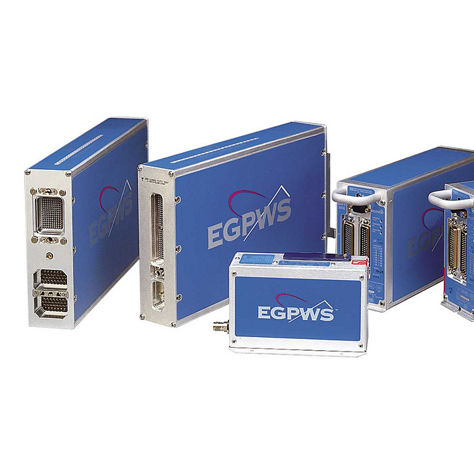
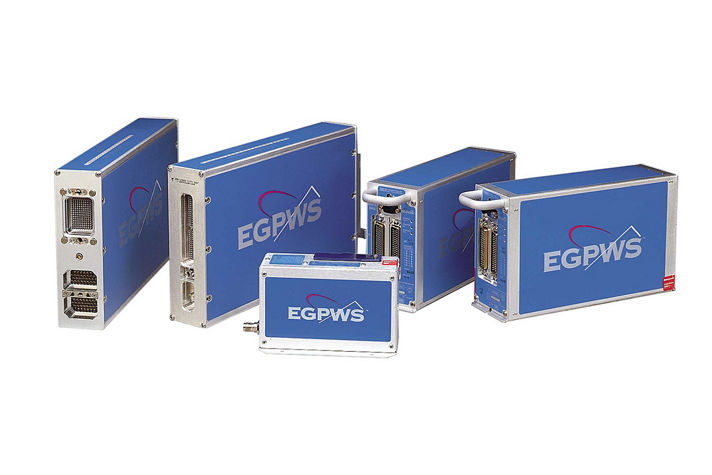
Ishihara – who was on the original EGPWS development team – is working today on other advancements, such as our new surface alerting (SURF-A) technology to improve runway safety. SURF-A is one of several major enhancements to the new Mark V-A EGPWS, which takes situational awareness to the next level.
“SURF-A uses aircraft positioning data from ADS-B In and other onboard systems to help pilots identify potential runway conflicts and improve situational awareness during taxi, takeoff and landing operations,” said Steve Fisher, Honeywell Aerospace offering management director for EGPWS. “It extends EGPWS protection to runways and helps prevent runway incursions, collisions and unstable operations."
“Mark V-A also provides earlier hazard awareness and better protection against GPS jamming and spoofing, which can affect system performance and accuracy,” said Fisher. “With a 25% improvement in reliability and an advanced hardware platform, Mark V-A enhances safety, situational awareness and operational readiness across every phase of flight.”
Modernizing for the next generation of flight safety
Thirty years ago, the original Mark V EGPWS changed aviation safety forever, but even the greatest technological breakthroughs must eventually be replaced. “Today’s operational environment demands a new generation of EGPWS capabilities,” Fisher said. “Aging hardware, component obsolescence and emerging threats such as GPS jamming and spoofing are driving the need for modernization across air transport and business aviation fleets.”
The Mark V-A gives you an advanced EGPWS platform designed to improve reliability, expand situational awareness and address evolving operational requirements. The system provides earlier hazard awareness, advanced runway safety capabilities and improved resistance to GPS interference while maintaining the trusted terrain awareness protections pilots have relied on for decades.
As support for legacy Mark V systems winds down, we are working closely with operators to develop tailored upgrade strategies that support compliance, operational readiness and long-term fleet performance.
"As support for legacy Mark V systems winds down, we are working closely with operators to develop tailored upgrade strategies.”
Michael Jirjis
Defense Navigation Offering Management, Director at Honeywell Aerospace

Move your fleet forward with Mark V-A
Ensure your platform is equipped for today’s terrain, runway and GPS‑interference challenges.